
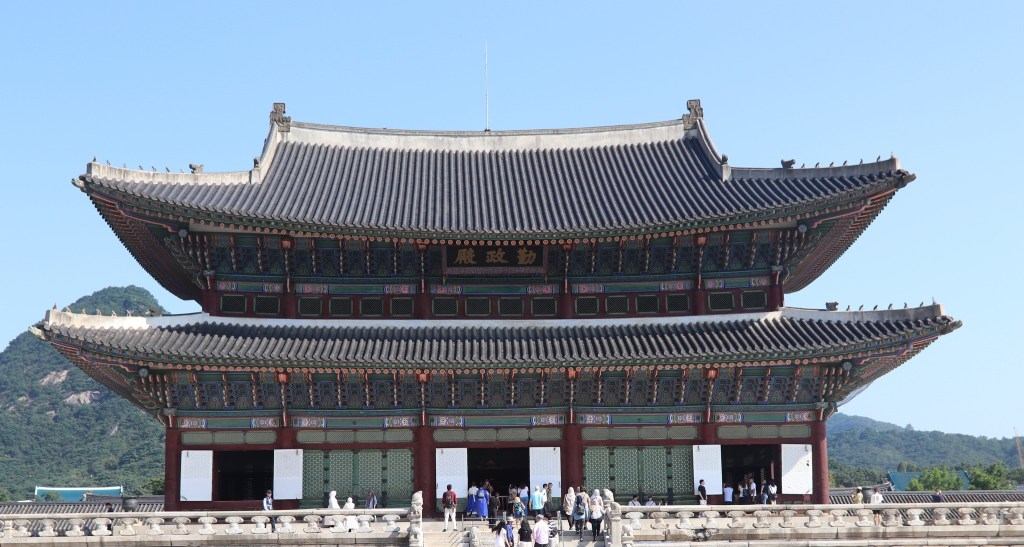
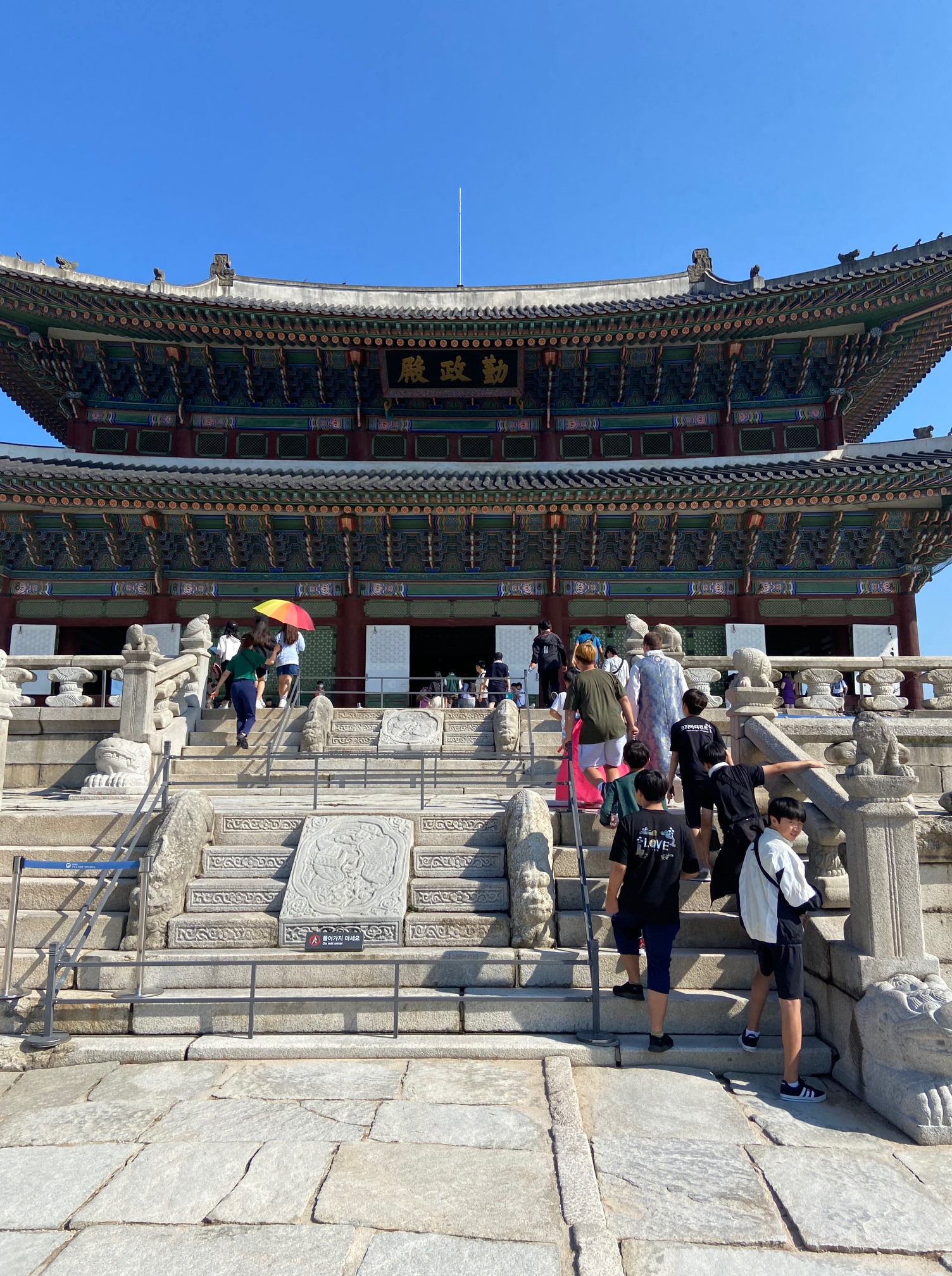
Gyeongbokgung Palace is one of the five greatest palaces of the Joseon Dynasty in South Korea with the largest in size and most colorful in appearance. This palace can be compare to the grand palaces built by King Ludwig here in Bavaria such as Schloss Neuschwanstein and Linderhof, or the Residenz palace in Münich.But here in Seoul–this is a must sight to see and the heart and image of what Seoul is.
So of course, seeing this palace is on top of our priority to see while touring Seoul. Seoul for me is a place where old and new lives in the same era. In the busiest streets of Seoul stood many relics and historical and cultural places of interest that will show just how rich the culture of Korean people, and I absolutely loved that.
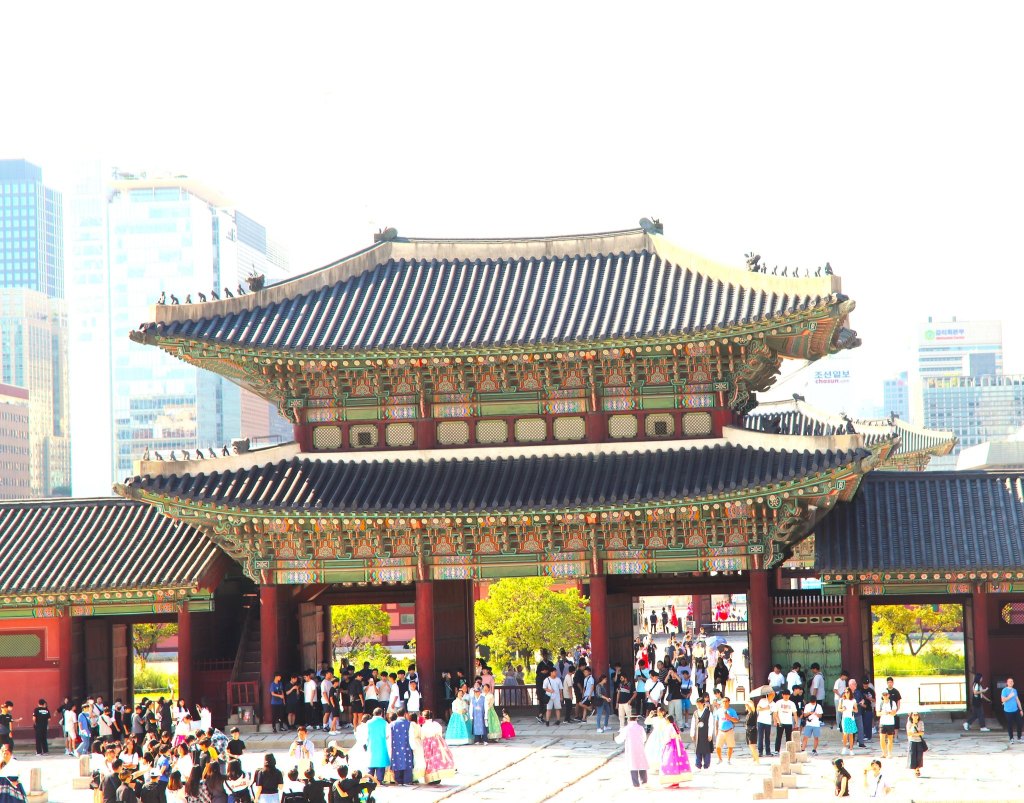
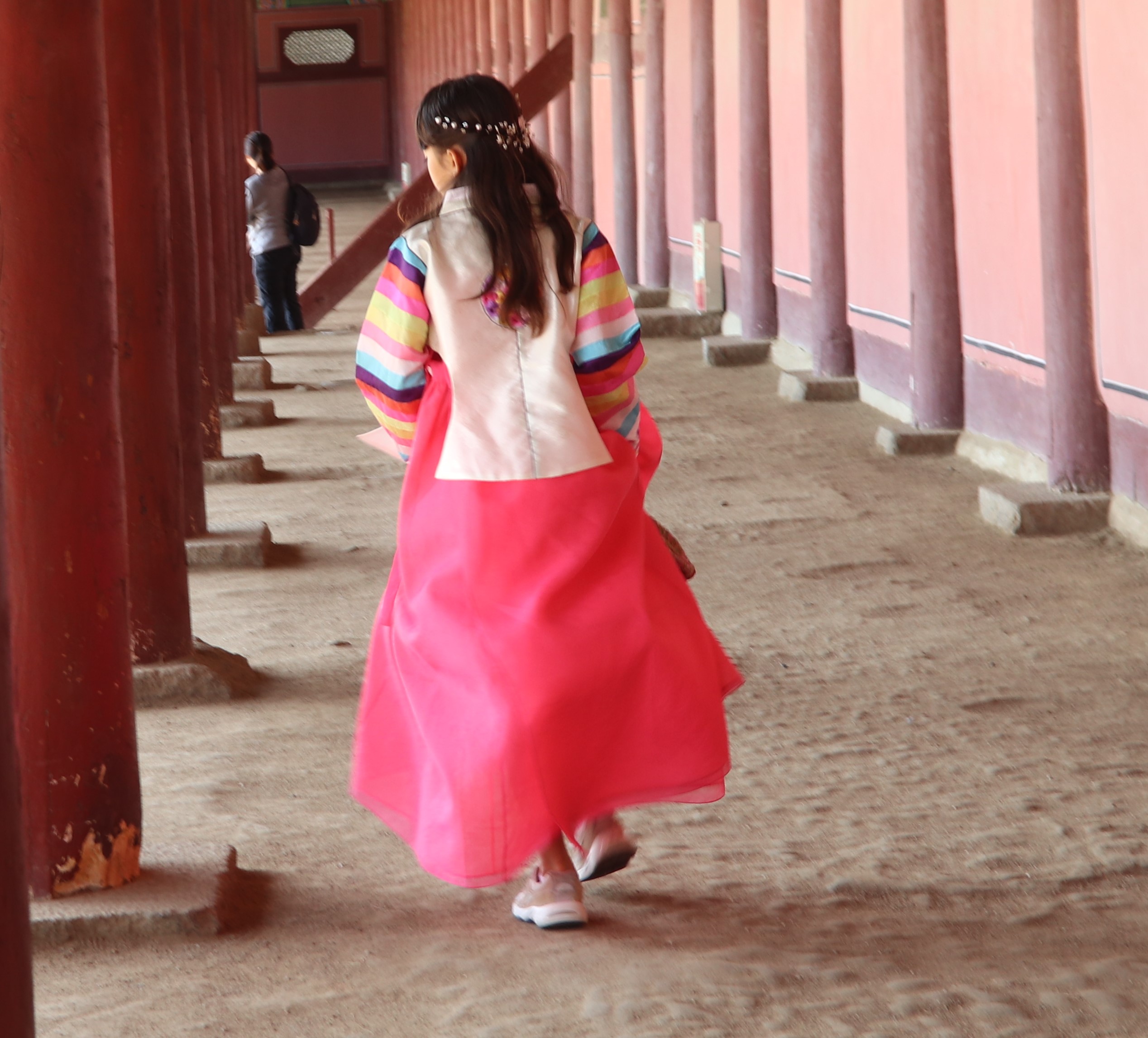
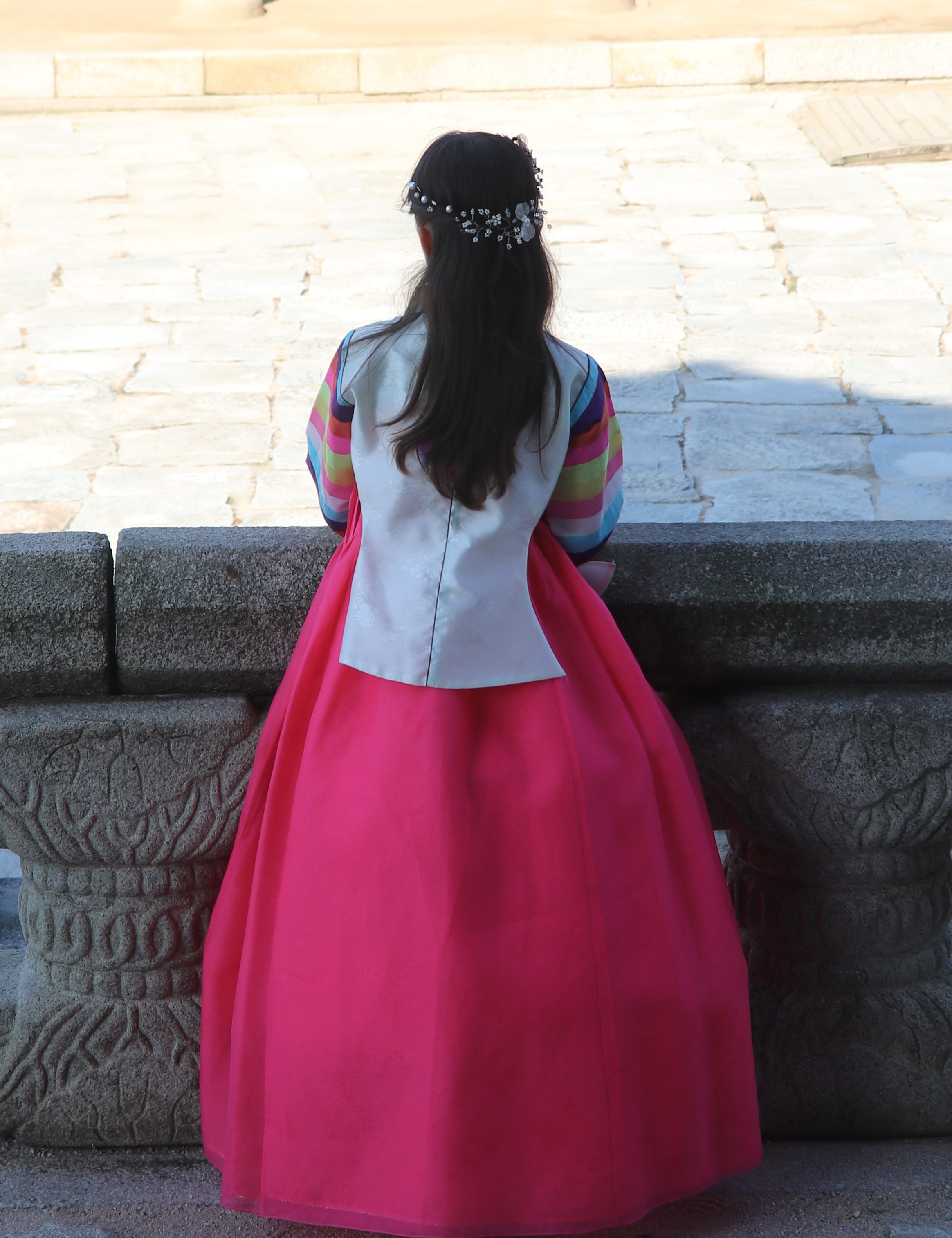
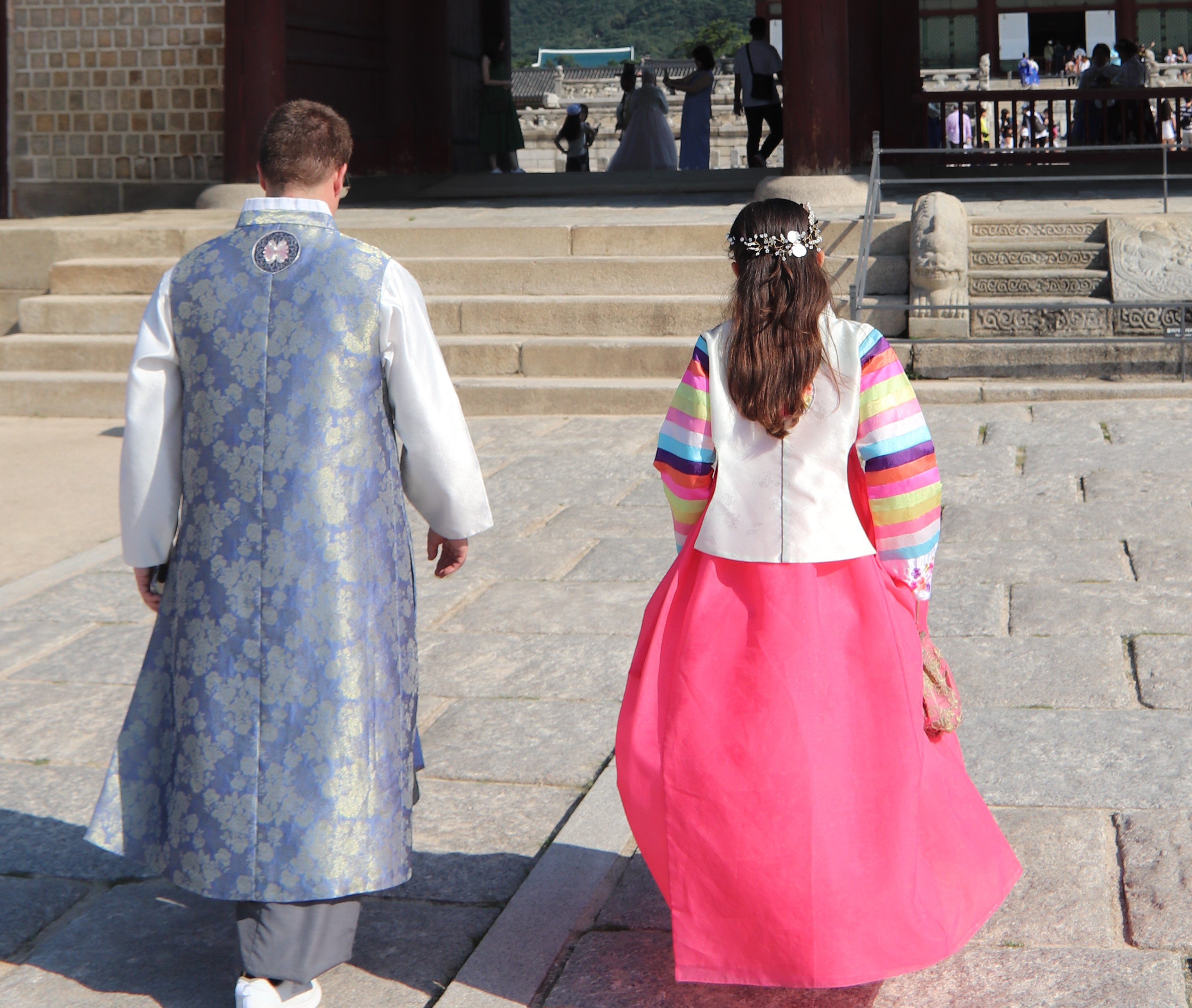
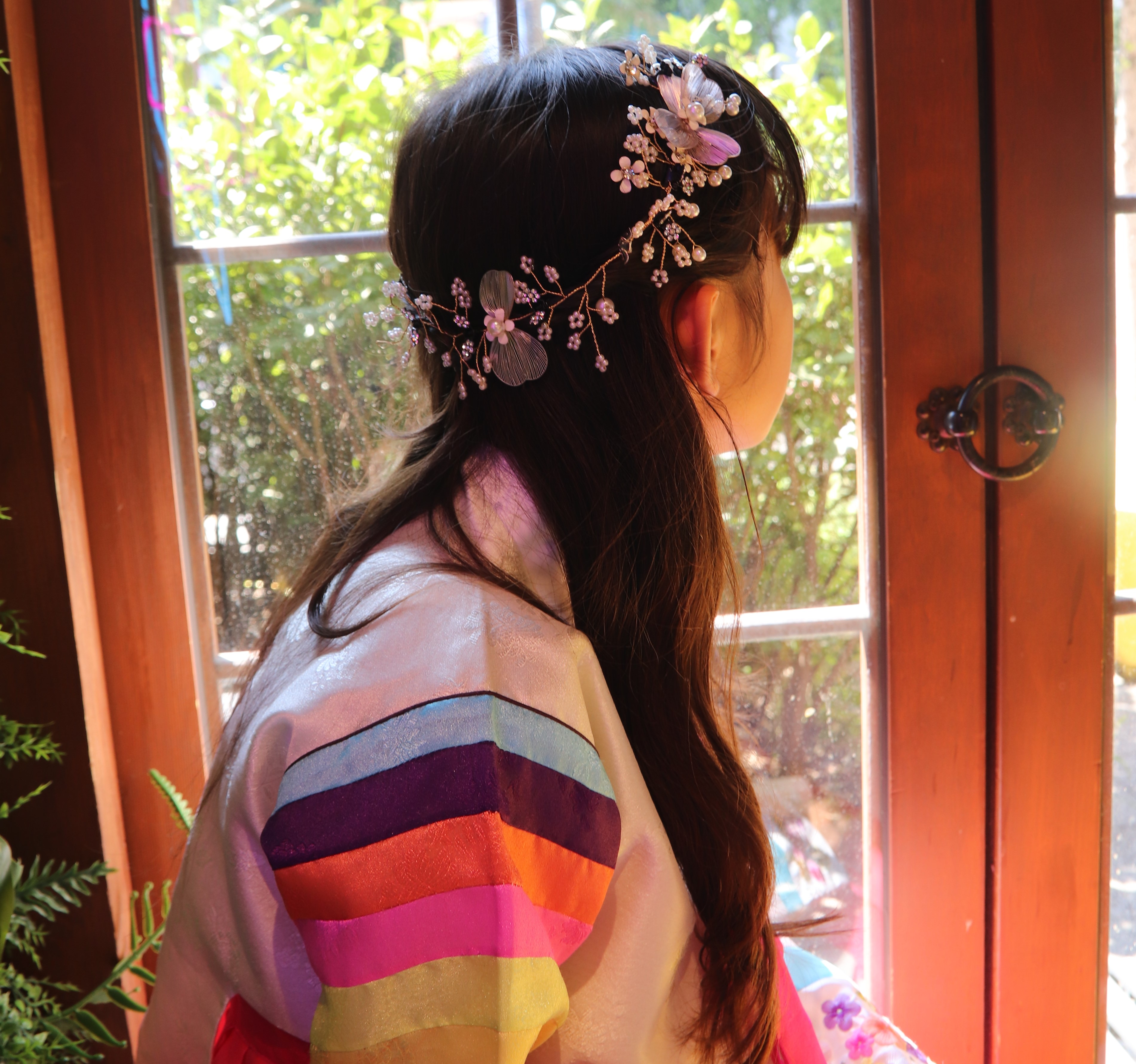
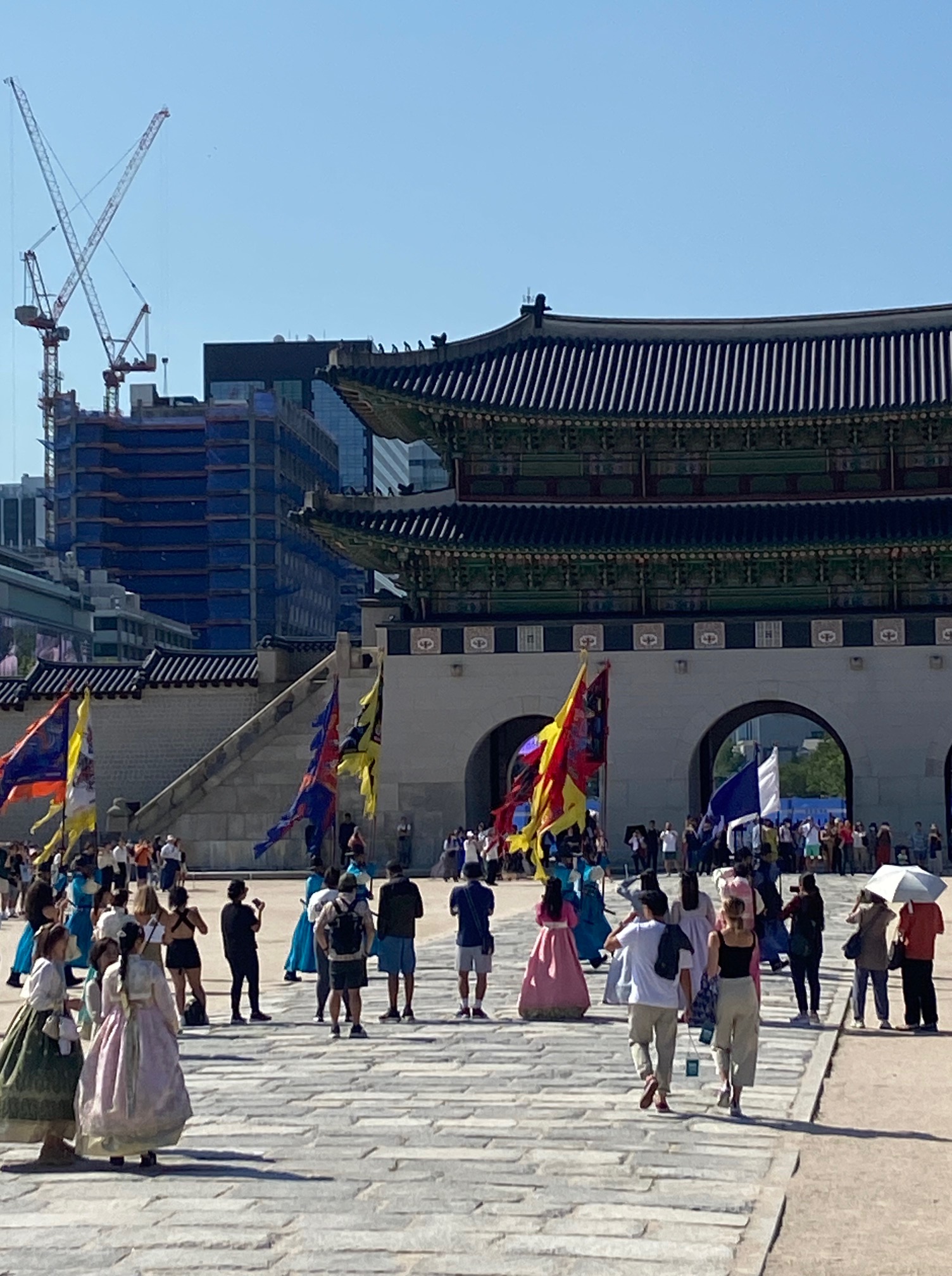
We´ve played tourist for a day and see the palace grounds, even dressed up in our Hanbok and just walk there as if we are about to see the King and the Korean princesses. But no, all we see were crowds, more & more crowds of course, the palace guards, and the traditional Joseon architecture of this place.
Gyeongbokgung Palace is a palace erected during the reign of King Taejo- around 1392 to 1910, which is the last kingdom in Korea.It was destroyed during the Japanese invasion in 1592, but it was reconstructed in 1868. It has four gates including the southern main gate, Gwanghamun.
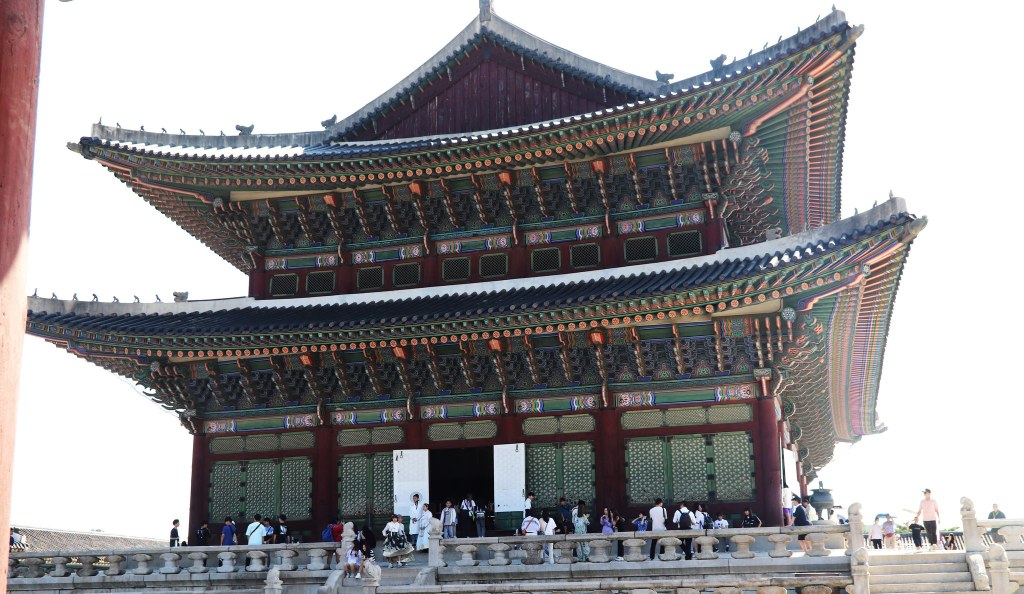
This palace serves as the main home of the royal faily and sit of government.The palace ground is quite large so I was not able to see everything of it. It reminds me so much of exploring Schonbrunn Palace in Vienna that it is really exhilarating to explore due to its vast size.
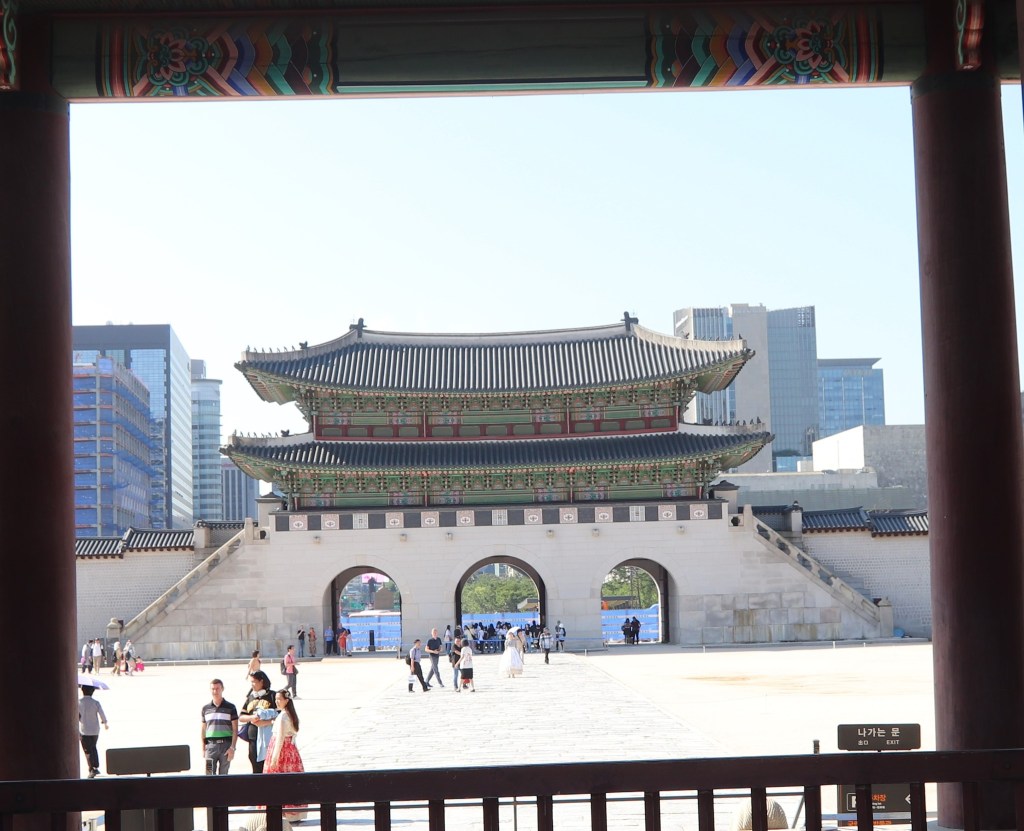
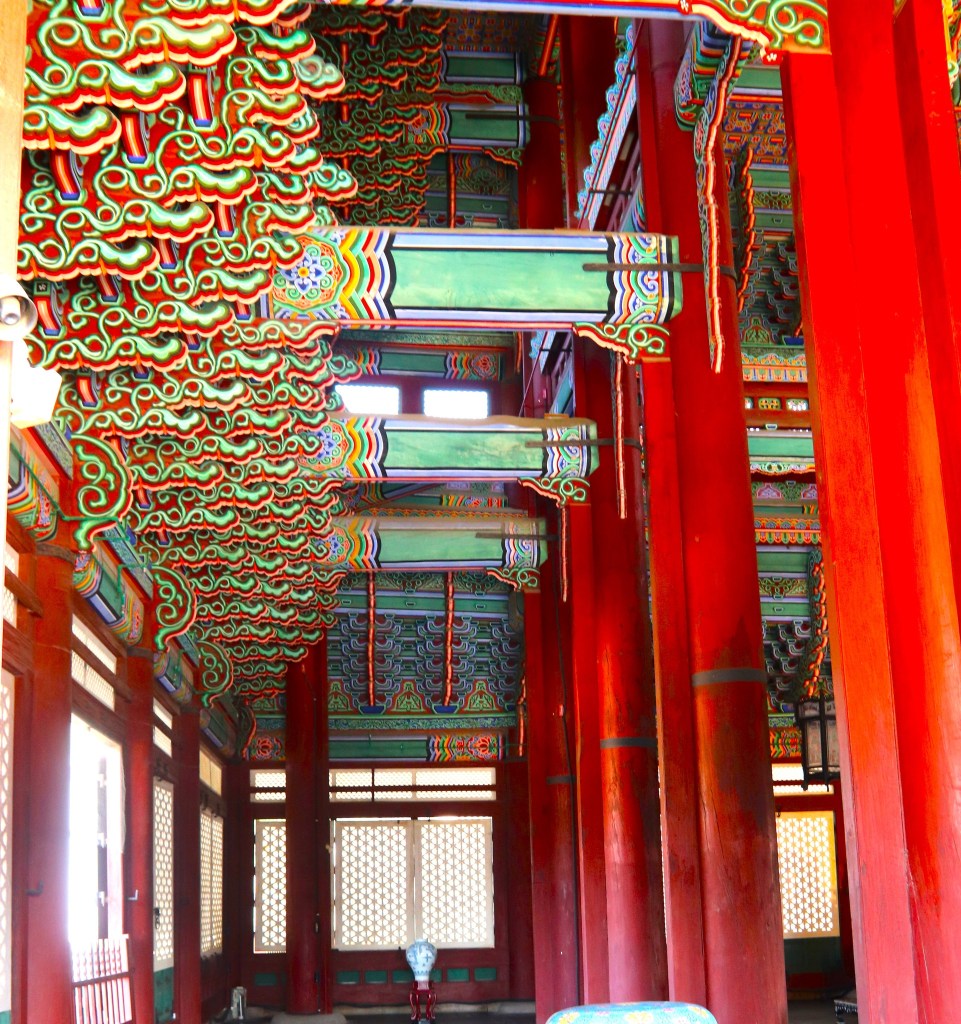
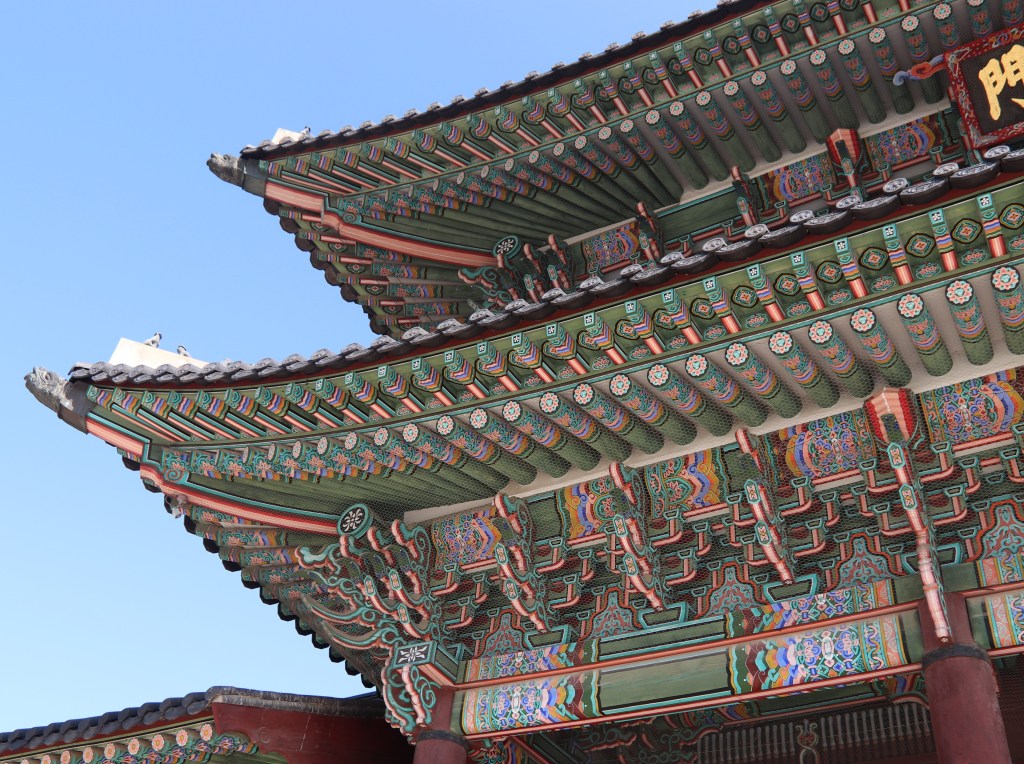
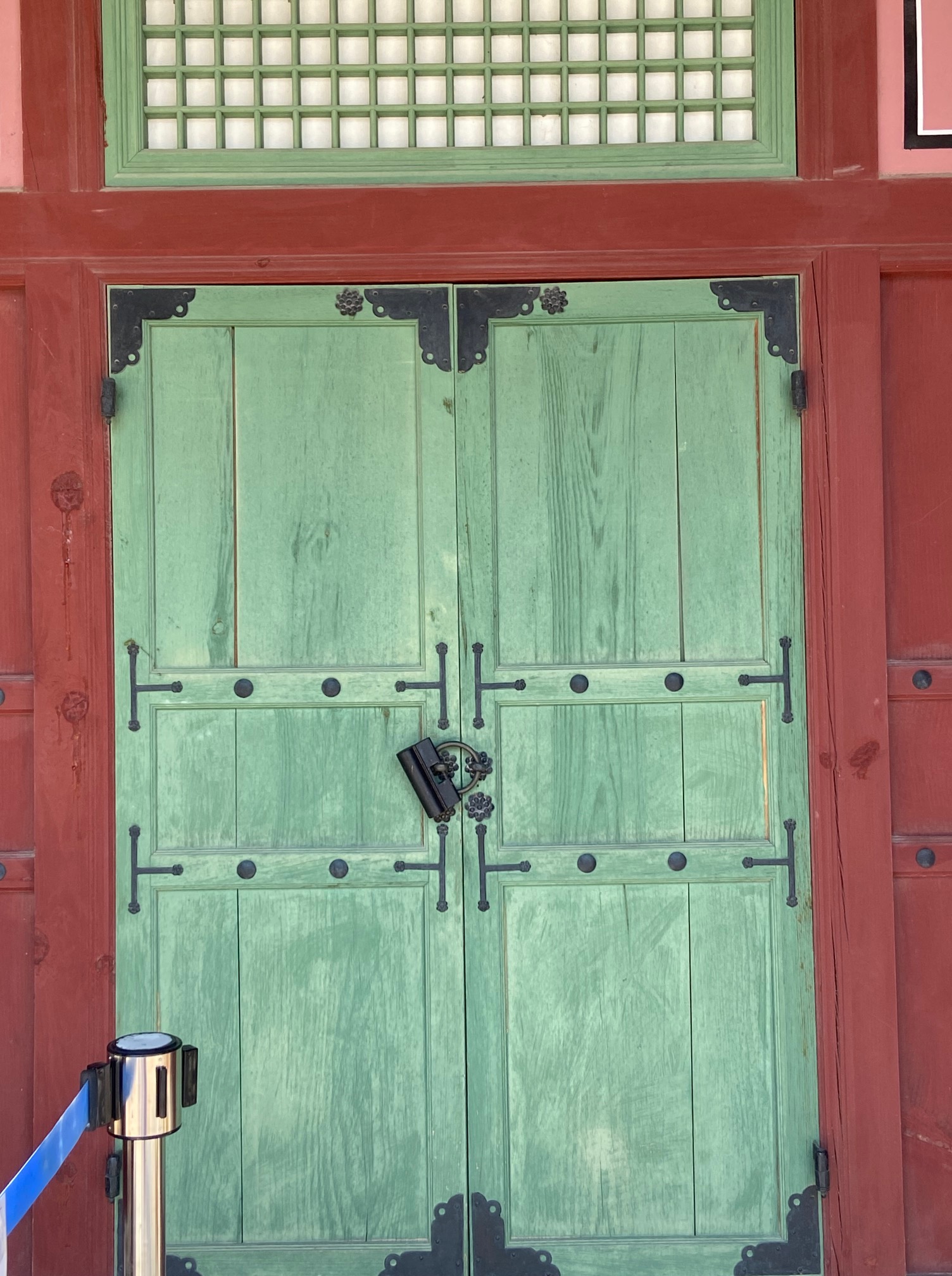
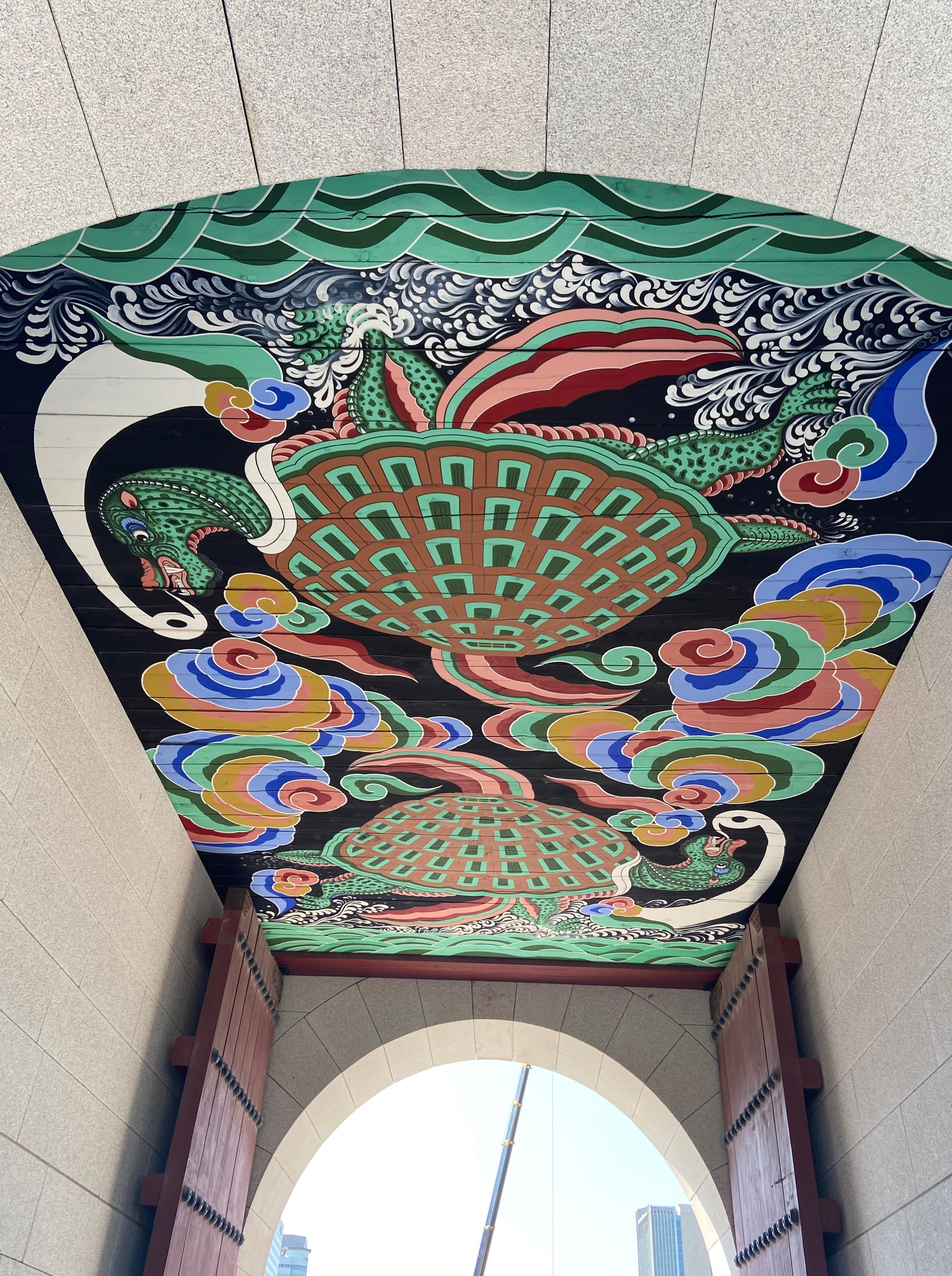
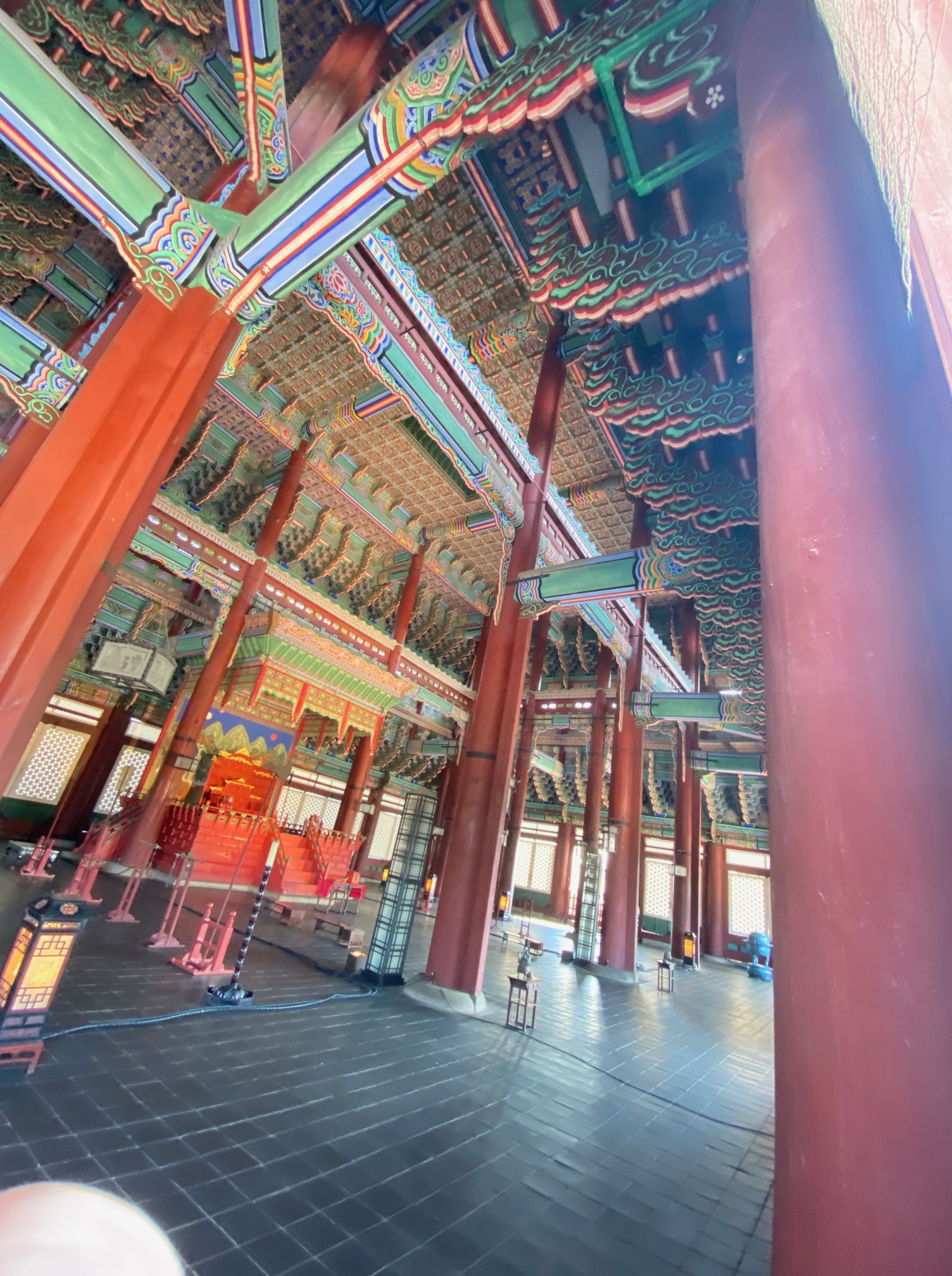
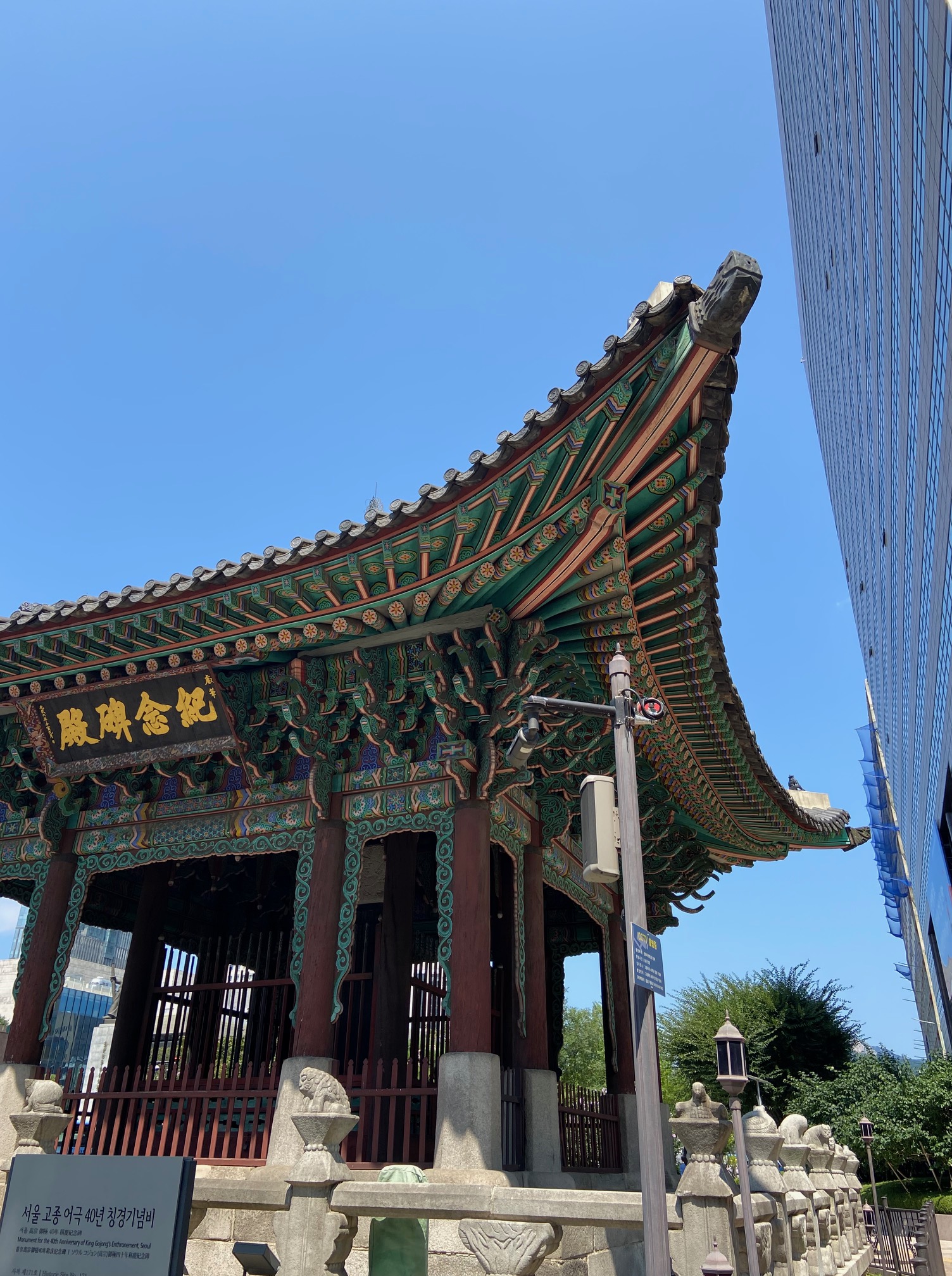
The main difference of European palaces from Korean Joseon palacse is that this palace among others are all empty, most are made of wood and timber and their attention to simple details like animals, lotus flower and partition walls.The colors are also prevalent of dark red, light green and grey roofing tile system called Giwa which is the traditional roofing system in South Korea.
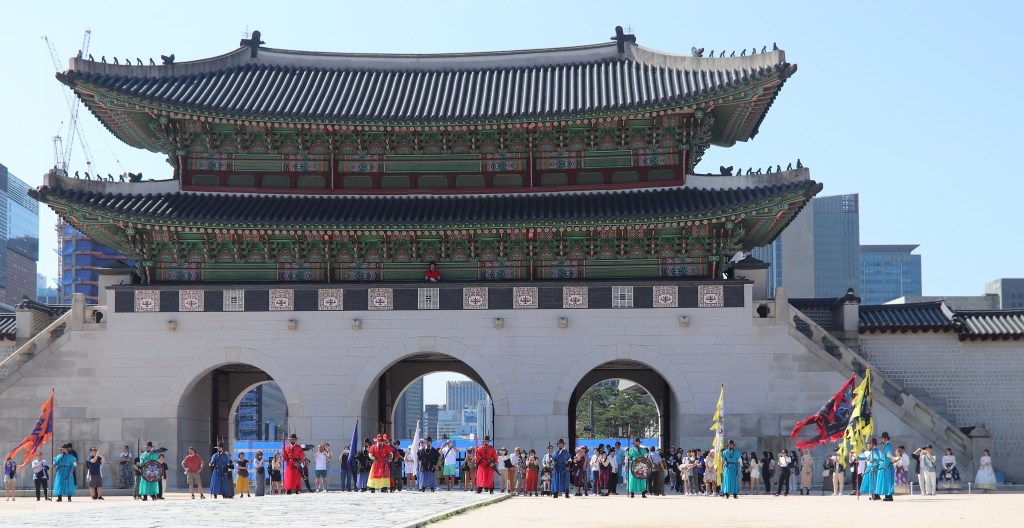
I´ve seen much of these during our palace and temple visits, and they really reminds me of the Korean cultural films I have seen. They looked more even amazing in real. These roof tiles are made of fired clay are key elements of traditional Korean architecture. They not only protected wooden structures from the weather; they also carried aesthetic value and symbolic meaning. Called chimi in Korea, these impressive features crowned both ends of the main roof ridge of prominent buildings. In addition to protecting and embellishing building peaks, they were believed to ward off evil.
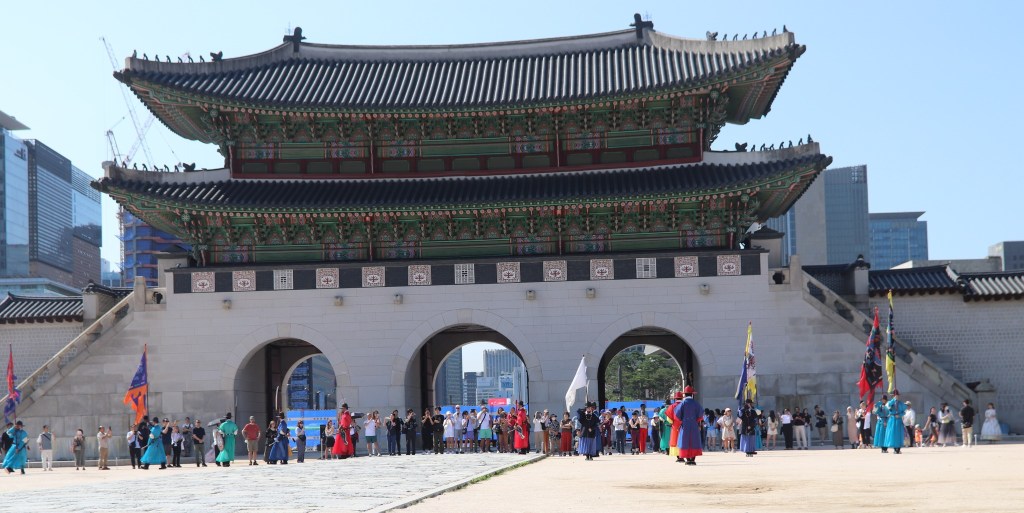
Thankfully that this palace was restored and preserved as cultural heritage property.Be wary though that all of its rooms were empty so you won´t be seeing anything inside, only walls and partitions unlike the palaces here in Germany that are still fully adorned with precious royal pieces and furnitures used by royal families. Since most of the palaces in Seoul are made of wood, it requires extensive ways to maintain and restore it due to weathering.It must be cold here during winter months!
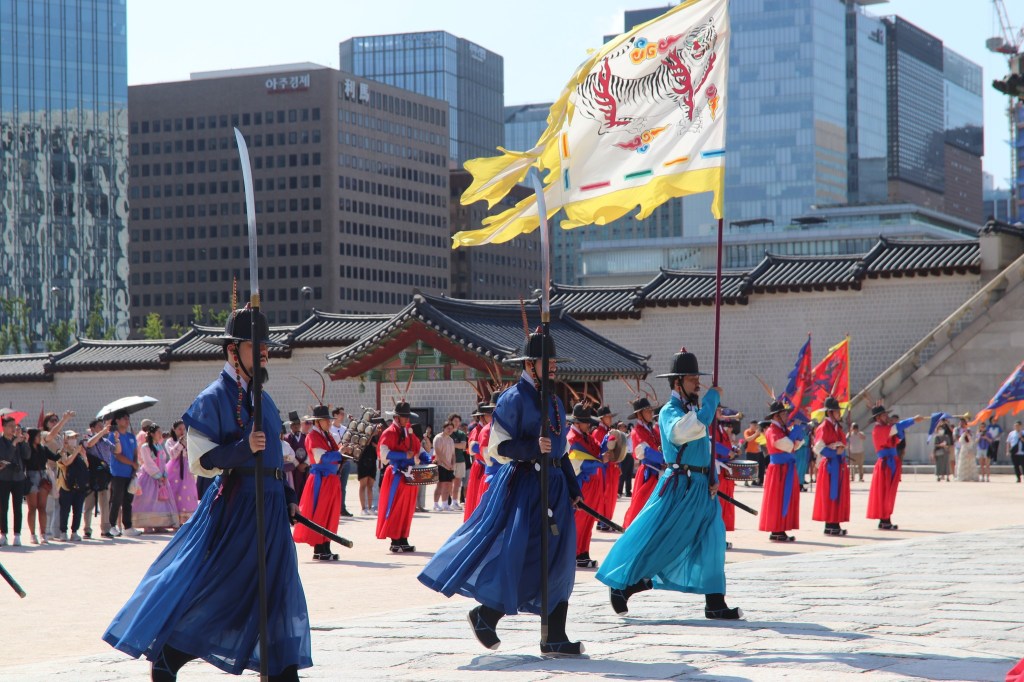
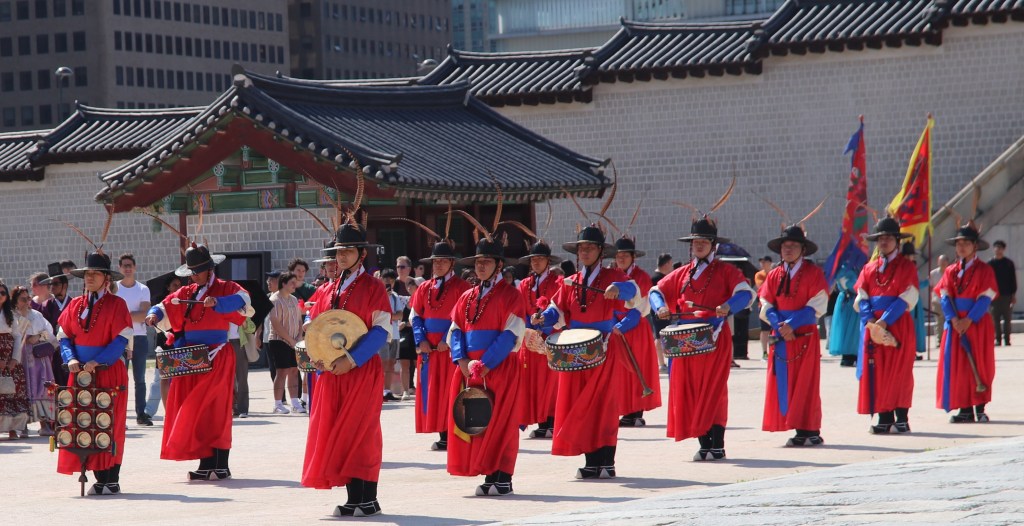
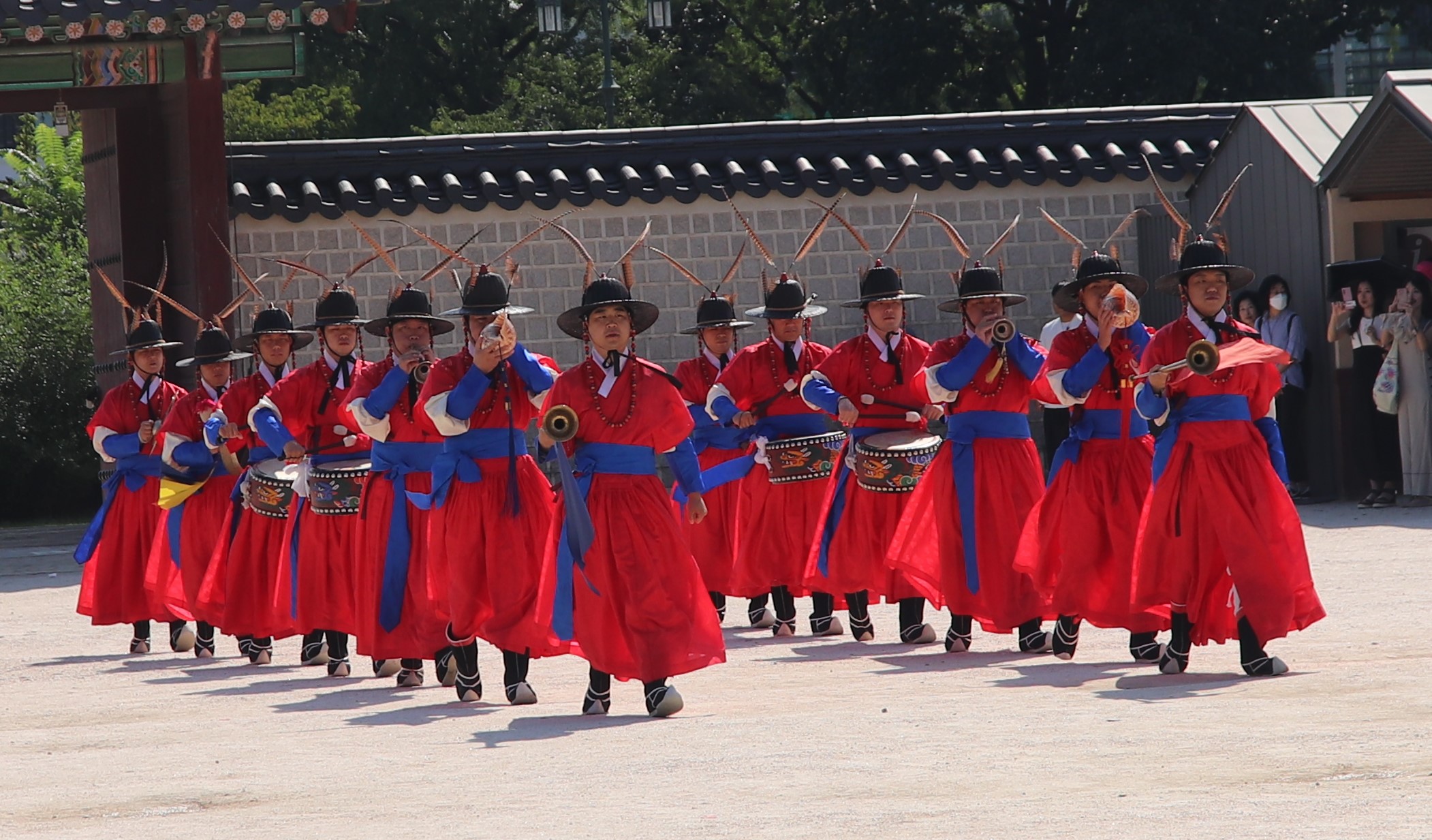
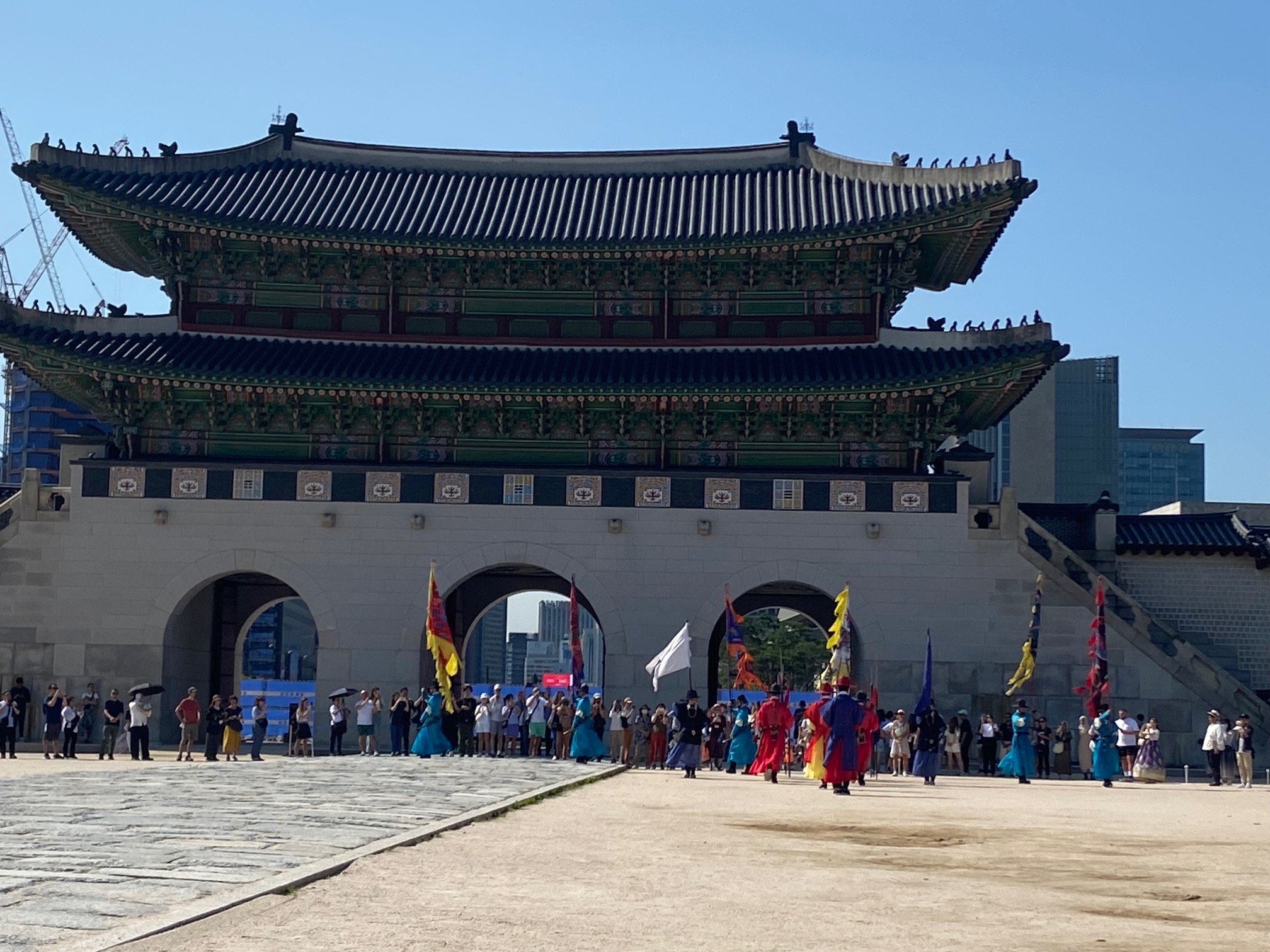
Watching the changing of the guards is quite a highlight of our day.It was around midday that we´ve witnessed this parade and it was quite an amazing performance.Again, the colors of guards uniform were so radiant and they are the star of the day.Watching them is for free so I didn´t complain about it.Very interesting and unique. Just like how Bavarians wear their Lederhosen and Dirndls!
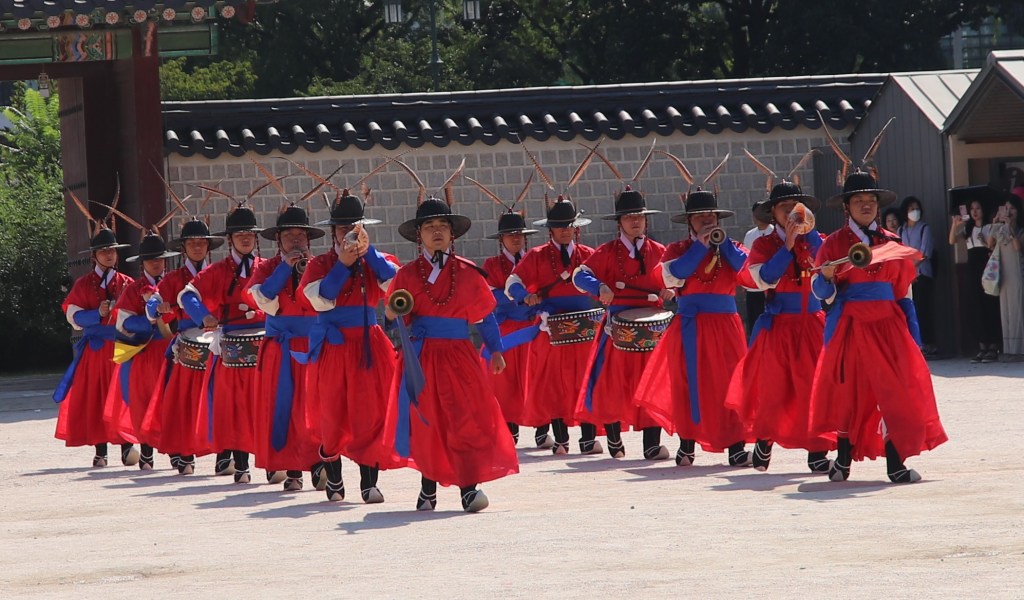
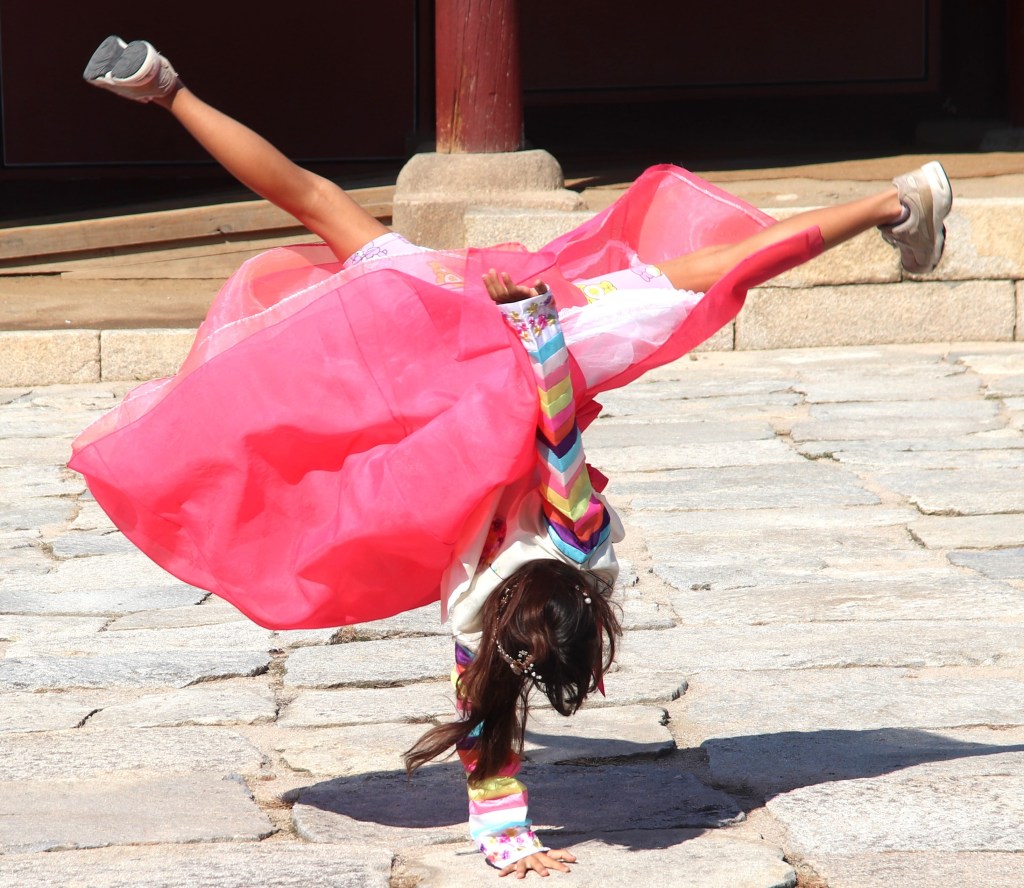
My daughter enjoyed the dressing part, managed to choose for herself her own type of Hanbok and walked the grounds, did the handstand stunts and everything.The tourist crowds started to flock so we decided to take our exit slowly from the palace.We are glad that we are here early so we had the chance to explore the palace with peace.
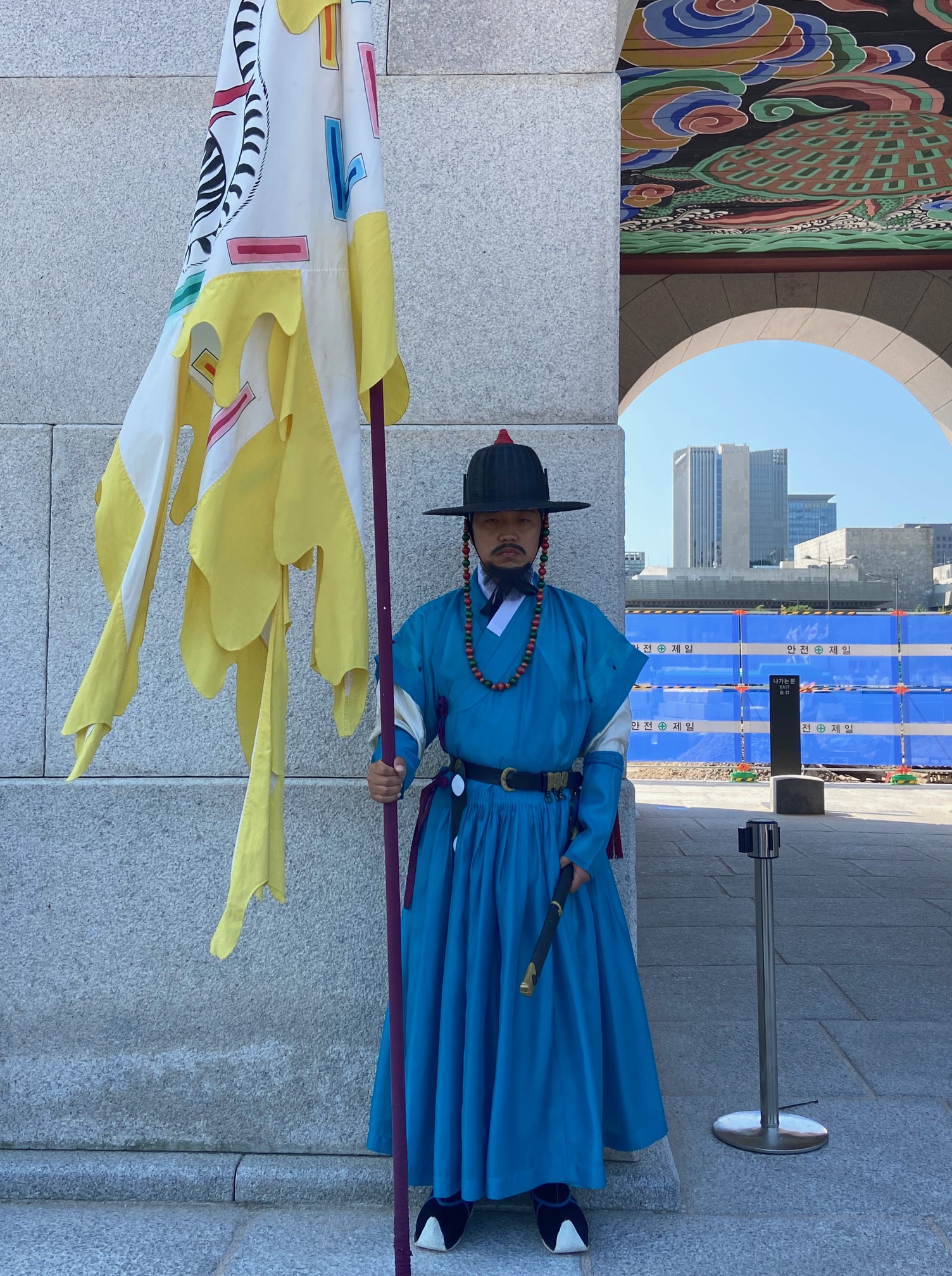
I can´t imagine what I am feeling when I see this place.It looks totally different from where I grew up and to other places I´ve been to.But here, I respect the rich Korean culture and their way of life.This palace is also called a” Palace greatly blessed by heaven“.In every corner, it reflects Confucianism which is the main ideology during the old times.It´s minimalistic but great details shows their beliefs as well.they used nets to protect the wood timber from birds instead of sharp iron to cast them away.
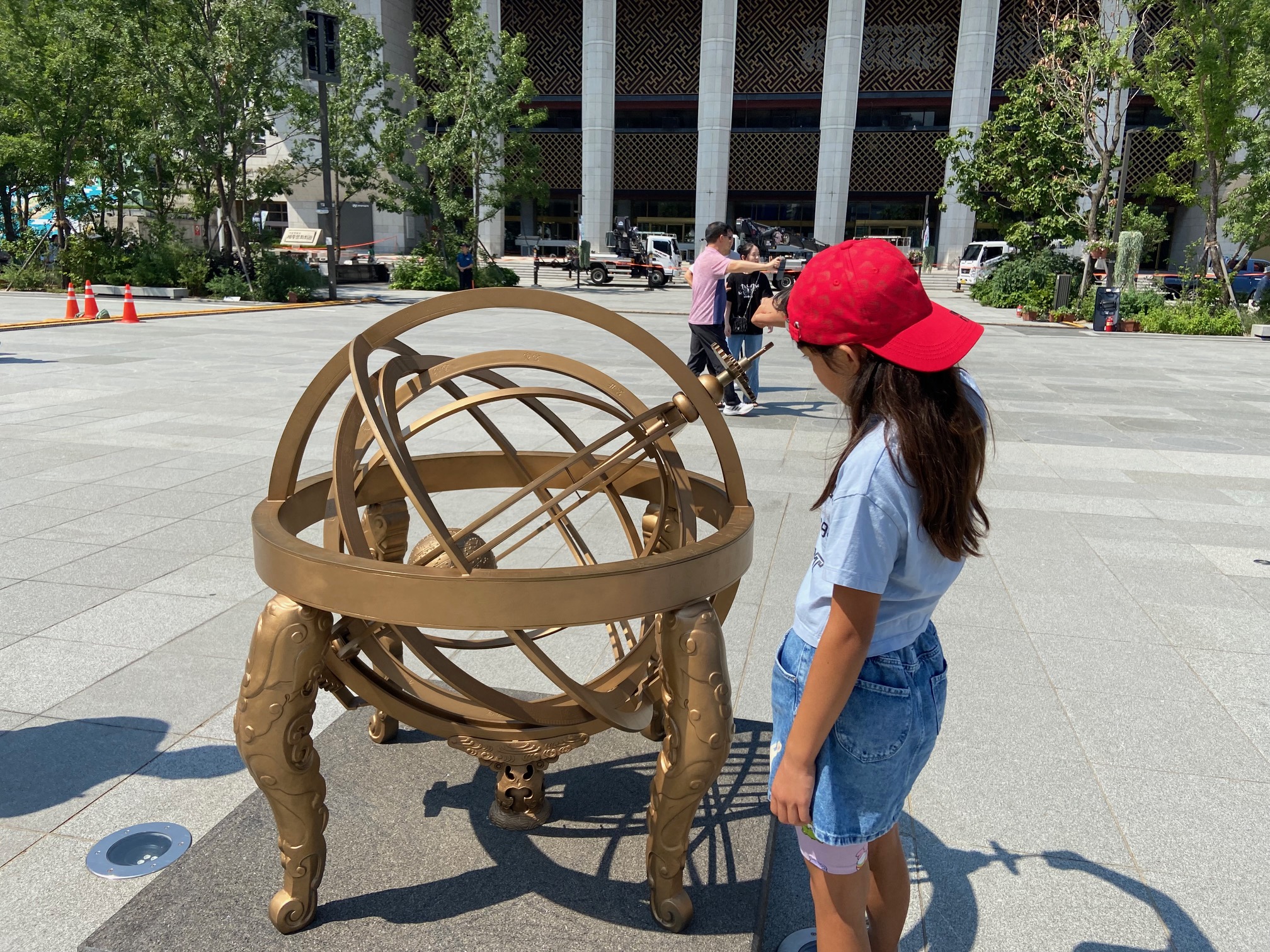
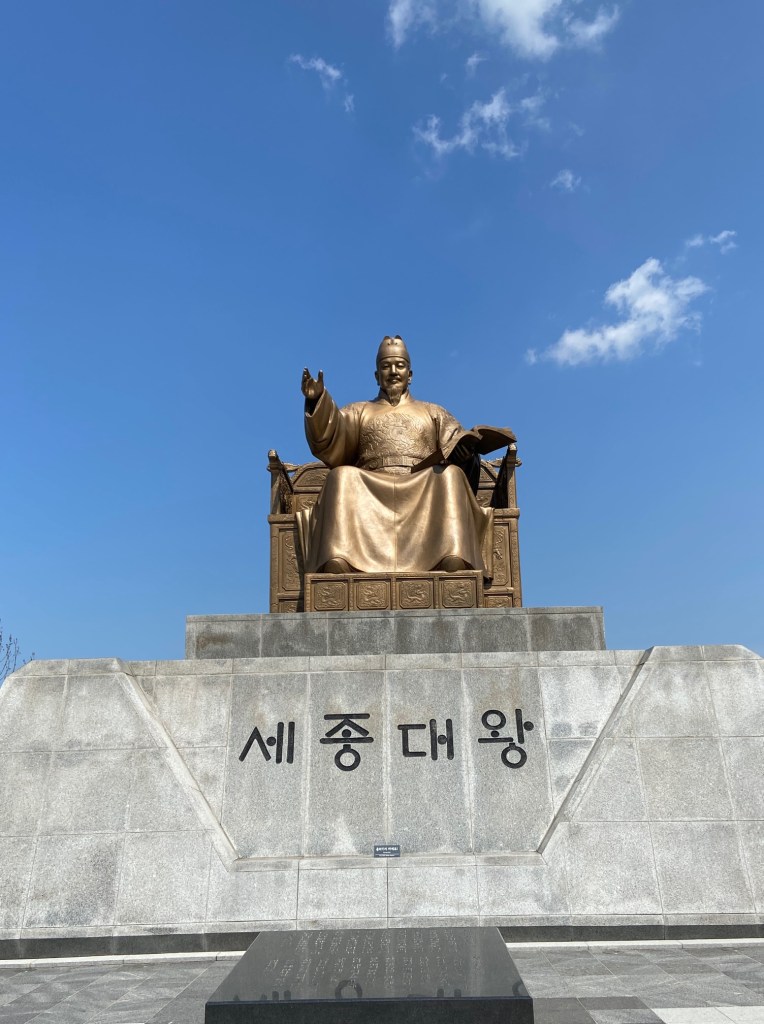
I haven´t had the chance to see and visit the national Museum of Korea which holds all the important relics and artifacts of this palace but i am sure that it is really a worth of visit if you have time to kill and wanting to explore more of Korean culture.
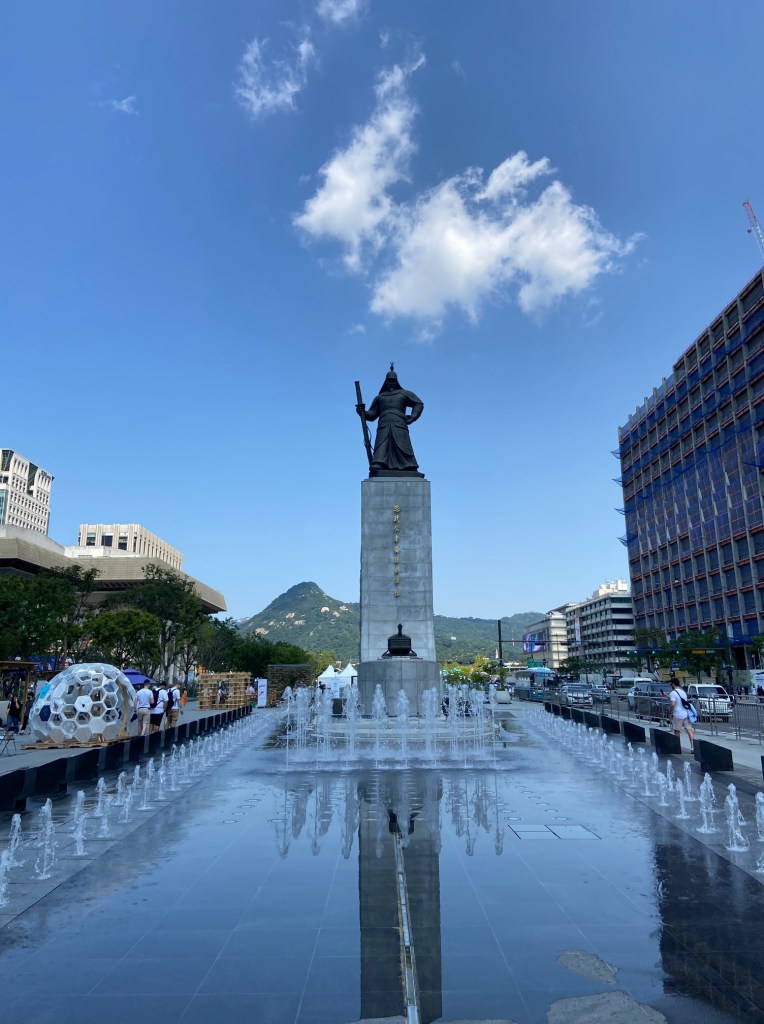
Seeing Seoul with all of its wonderful colors and vibrancy made us ache for another return to this place.The sight of this palace behind the mountain is a memorable postcard that we always cherish.We did a lot of walking in this city, in the heat of summer but it was all worth it.To totally immerse in this city, we´ve tried lots of different Korean dishes and really they are healthy. It´s only in Seoul that we´ve never eaten in a fast food because their food was so great. Their side dishes are enough to fill us up.
Seeing this place brought us to time travel to Joseon Dynasty and what a day it was!
We definitely love South Korea and Seoul, how about you?
“We travel not to escape life, but for life not to escape us “
Until then, Tschüß!

 justbluedutch
The style of architecture is so different from European, isn’t it? It’s really beautiful. Thanks for taking me there.
LikeLiked by 1 person
I’ve not had a chance to visit South Korea so thanks for sharing your photos.
LikeLiked by 1 person
What a cool outfit, your daughter is like a princess doing handstands!
LikeLiked by 1 person
And she looks like an adult from behind!
LikeLiked by 1 person
She is almost as big as me…she can wear my clothes now :´-))
LikeLiked by 1 person
That´s one of the things she´s good at.How kids can be so flexible is a wonder for aging people like me..LOL
LikeLiked by 1 person
I wish you have the chance to see Seoul, Its a wonderful country.
LikeLike
Yes,totally different from what I´ve seen here. Its great to see both side of this world.
LikeLiked by 1 person